
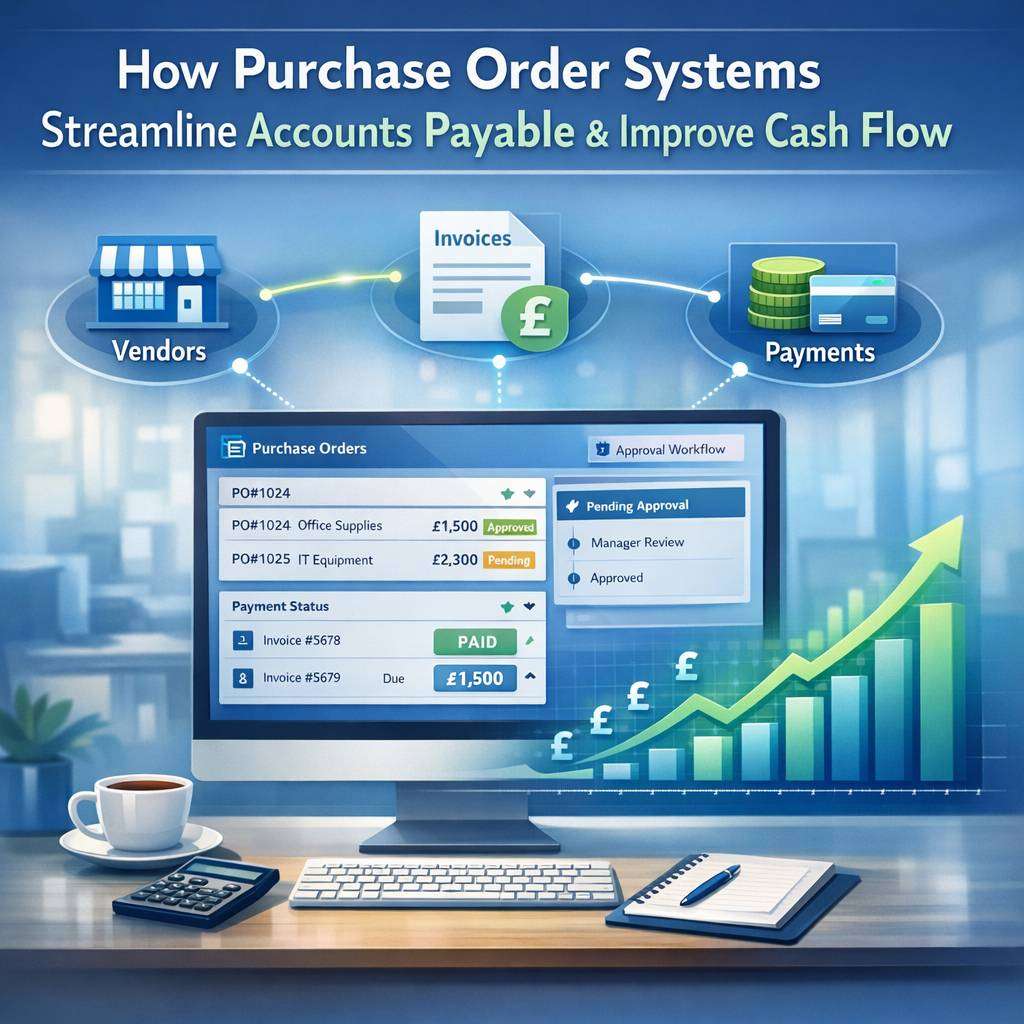
A reliable purchase order systems process streamlines procurement, reduces errors, and improves cost control across departments. A well-implemented solution enhances visibility, boosts efficiency, and accelerates approvals from requisition to invoicing. Companies can scale with demand while maintaining compliance and auditability. For more information, visit purchase order systems.
Across organisations of all sizes, the efficiency of accounts payable (AP) and the health of cash flow hinge on accurate, timely purchases. A well-implemented purchase order system acts as the backbone of procurement, ensuring every expenditure is properly authorised, tracked, and paid. In this post, we explore how modern PO systems transform AP processes and give finance teams greater visibility into cash flow.
Buying processes can be fraught with manual errors, fragmented approvals, and delays. A robust online purchase order system standardises requisitions, enforces policy, and creates an auditable trail from initial request to payment. By integrating with accounts payable and general ledger (GL) systems, a PO software solution reduces duplicate orders, prevents maverick buying, and provides real-time data that informs working capital decisions. The result is fewer bottlenecks, faster supplier payments, and better supplier relationships.
What a purchase order system does for AP
-
Centralised control and policy enforcement: A cloud based purchase order software enforces approved pricing, supplier lists, and budget checks before a purchase order (PO) is issued. This prevents unauthorised spend and helps maintain contract compliance, reducing the volume of manual reconciliations necessary in AP.
-
Clear PO-to-invoice matching: When a supplier submits an invoice, the PO system automatically matches PO numbers, line items, quantities, and prices. This three-way match (PO, receipt, invoice) is a standard control that reduces payment discrepancies and exceptions, accelerating theinvoice workflow.
-
Accurate data capture: Digital purchase order software captures PO data in a structured format, enabling seamless posting to the AP sub-ledger. This eliminates re-keying errors and speeds up posting, particularly for large volumes of transactions.
-
Efficient approvals and workflows: PO software supports automated routing of requisitions to the right approvers based on criteria such as spend level, department, or project. Faster approvals shorten cycle times and prevent late payment charges.
-
Enhanced supplier collaboration: An online purchase order system provides suppliers with real-time PO visibility, reducing inquiries and leading to better invoice coordination. Some systems offer supplier portals where vendors can submit invoices directly, further streamlining the process.
Centralised control and policy enforcement: A cloud based purchase order software enforces approved pricing, supplier lists, and budget checks before a purchase order (PO) is issued. This prevents unauthorised spend and helps maintain contract compliance, reducing the volume of manual reconciliations necessary in AP.
Clear PO-to-invoice matching: When a supplier submits an invoice, the PO system automatically matches PO numbers, line items, quantities, and prices. This three-way match (PO, receipt, invoice) is a standard control that reduces payment discrepancies and exceptions, accelerating theinvoice workflow.
Accurate data capture: Digital purchase order software captures PO data in a structured format, enabling seamless posting to the AP sub-ledger. This eliminates re-keying errors and speeds up posting, particularly for large volumes of transactions.
Efficient approvals and workflows: PO software supports automated routing of requisitions to the right approvers based on criteria such as spend level, department, or project. Faster approvals shorten cycle times and prevent late payment charges.
Enhanced supplier collaboration: An online purchase order system provides suppliers with real-time PO visibility, reducing inquiries and leading to better invoice coordination. Some systems offer supplier portals where vendors can submit invoices directly, further streamlining the process.
Impact on cash flow management
-
Improved forecasting and working capital management: The data generated by a PO system gives finance teams a clearer picture of committed expenditures versus available cash. This visibility supports more accurate cash flow forecasting and helps prioritise payments during liquidity crunches.
-
Early payment discounts and payment terms optimisation: With better control over approvals and later payment cycles, organisations can leverage early payment discounts where available. Conversely, clearer visibility into when a PO will be satisfied helps negotiate longer payment terms with suppliers where appropriate.
-
Reduced late payment penalties: When AP teams can quickly locate authorised POs and invoices, they are less likely to miss payment deadlines. Automated reminders and standardised workflows further minimise late payments.
-
Streamlined month-end close: A well-integrated PO system reduces manual reconciliation at month‑end. Automatic posting of PO-based encumbrances and commitments tightens control over budgets and speeds up financial close.
Improved forecasting and working capital management: The data generated by a PO system gives finance teams a clearer picture of committed expenditures versus available cash. This visibility supports more accurate cash flow forecasting and helps prioritise payments during liquidity crunches.
Early payment discounts and payment terms optimisation: With better control over approvals and later payment cycles, organisations can leverage early payment discounts where available. Conversely, clearer visibility into when a PO will be satisfied helps negotiate longer payment terms with suppliers where appropriate.
Reduced late payment penalties: When AP teams can quickly locate authorised POs and invoices, they are less likely to miss payment deadlines. Automated reminders and standardised workflows further minimise late payments.
Streamlined month-end close: A well-integrated PO system reduces manual reconciliation at month‑end. Automatic posting of PO-based encumbrances and commitments tightens control over budgets and speeds up financial close.
Choosing the right solution: features and considerations
-
Cloud based purchase order software vs on-premises: Most organisations now opt for cloud based purchase order software due to scalability, lower upfront costs, and easier updates. A cloud solution also supports remote approvers and users, which is increasingly pertinent for hybrid or distributed teams.
-
Integration with ERP and accounting systems: The value of a po system for small business or larger enterprises increases when it integrates smoothly with ERP, GL, and supplier networks. Look for bi-directional data flows, automatic PO-Invoice matching, and the ability to post directly to the correct GL accounts.
-
Flexibility of purchase ordering software: Organisations vary in purchasing policies. The best options allow custom workflows, multi-tier approvals, and role-based access. This ensures compliance without hindering productivity.
-
Usability and supplier adoption: User-friendly interfaces reduce resistance and encourage compliance. A straightforward online purchase order system with clear dashboards helps both internal users and suppliers.
-
Security and auditability: Given the financial nature of AP, select solutions with strong access controls, audit trails, and data protection. A comprehensive history of PO changes supports compliance and internal controls.
Cloud based purchase order software vs on-premises: Most organisations now opt for cloud based purchase order software due to scalability, lower upfront costs, and easier updates. A cloud solution also supports remote approvers and users, which is increasingly pertinent for hybrid or distributed teams.
Integration with ERP and accounting systems: The value of a po system for small business or larger enterprises increases when it integrates smoothly with ERP, GL, and supplier networks. Look for bi-directional data flows, automatic PO-Invoice matching, and the ability to post directly to the correct GL accounts.
Flexibility of purchase ordering software: Organisations vary in purchasing policies. The best options allow custom workflows, multi-tier approvals, and role-based access. This ensures compliance without hindering productivity.
Usability and supplier adoption: User-friendly interfaces reduce resistance and encourage compliance. A straightforward online purchase order system with clear dashboards helps both internal users and suppliers.
Security and auditability: Given the financial nature of AP, select solutions with strong access controls, audit trails, and data protection. A comprehensive history of PO changes supports compliance and internal controls.
Real-world benefits across departments
-
Finance and procurement alignment: The finance function gains clearer insight into procurement patterns, enabling smarter budget allocation and vendor negotiations. Procurement benefits from faster cycle times and reduced administrative effort.
-
Departmental efficiency: End-users experience quicker requisition-to-PO turnarounds, improving productivity. This is particularly valuable in fast-moving environments such as project-based teams or manufacturing.
-
Risk management: With stricter controls around requisitioning and approval, organisations can mitigate maverick buying, policy breaches, and fraud risk. Transparent data supports audits and governance.
Finance and procurement alignment: The finance function gains clearer insight into procurement patterns, enabling smarter budget allocation and vendor negotiations. Procurement benefits from faster cycle times and reduced administrative effort.
Departmental efficiency: End-users experience quicker requisition-to-PO turnarounds, improving productivity. This is particularly valuable in fast-moving environments such as project-based teams or manufacturing.
Risk management: With stricter controls around requisitioning and approval, organisations can mitigate maverick buying, policy breaches, and fraud risk. Transparent data supports audits and governance.
Implementation considerations and best practices
-
Start with a practical scope: Begin with a pilot in one department or a few high-volume categories to prove value before scaling across the organisation.
-
Map processes and data: Document current requisition, approval, and supplier setup processes. Ensure data cleanliness for suppliers and items to maximise matching accuracy.
-
Train users and champions: Appoint procurement and AP champions to lead adoption. Offer role-specific training and regular refreshers to sustain compliance.
-
Ensure supplier readiness: Communicate changes to suppliers and provide access to supplier portals where possible. Supplier adoption accelerates the value of an online purchase order system.
-
Monitor and continuously improve: Establish KPIs such as cycle time from requisition to PO, PO-to-invoice match rate, and early payment discounts captured. Use dashboards to track performance and identify bottlenecks.
Start with a practical scope: Begin with a pilot in one department or a few high-volume categories to prove value before scaling across the organisation.
Map processes and data: Document current requisition, approval, and supplier setup processes. Ensure data cleanliness for suppliers and items to maximise matching accuracy.
Train users and champions: Appoint procurement and AP champions to lead adoption. Offer role-specific training and regular refreshers to sustain compliance.
Ensure supplier readiness: Communicate changes to suppliers and provide access to supplier portals where possible. Supplier adoption accelerates the value of an online purchase order system.
Monitor and continuously improve: Establish KPIs such as cycle time from requisition to PO, PO-to-invoice match rate, and early payment discounts captured. Use dashboards to track performance and identify bottlenecks.
A purchase order system is more than a tool for processing purchases. When properly implemented, it integrates procurement with accounts payable and cash flow planning, delivering tighter controls, faster workflows, and smarter working capital management. Whether you describe it as po software, a digital purchase order software solution, or a cloud based purchase order software platform, the benefits are clear: better governance, increased efficiency, and a healthier financial position for your organisation. For small businesses and larger enterprises alike, a well-executed purchase ordering system represents a strategic investment in operational discipline and financial resilience.