
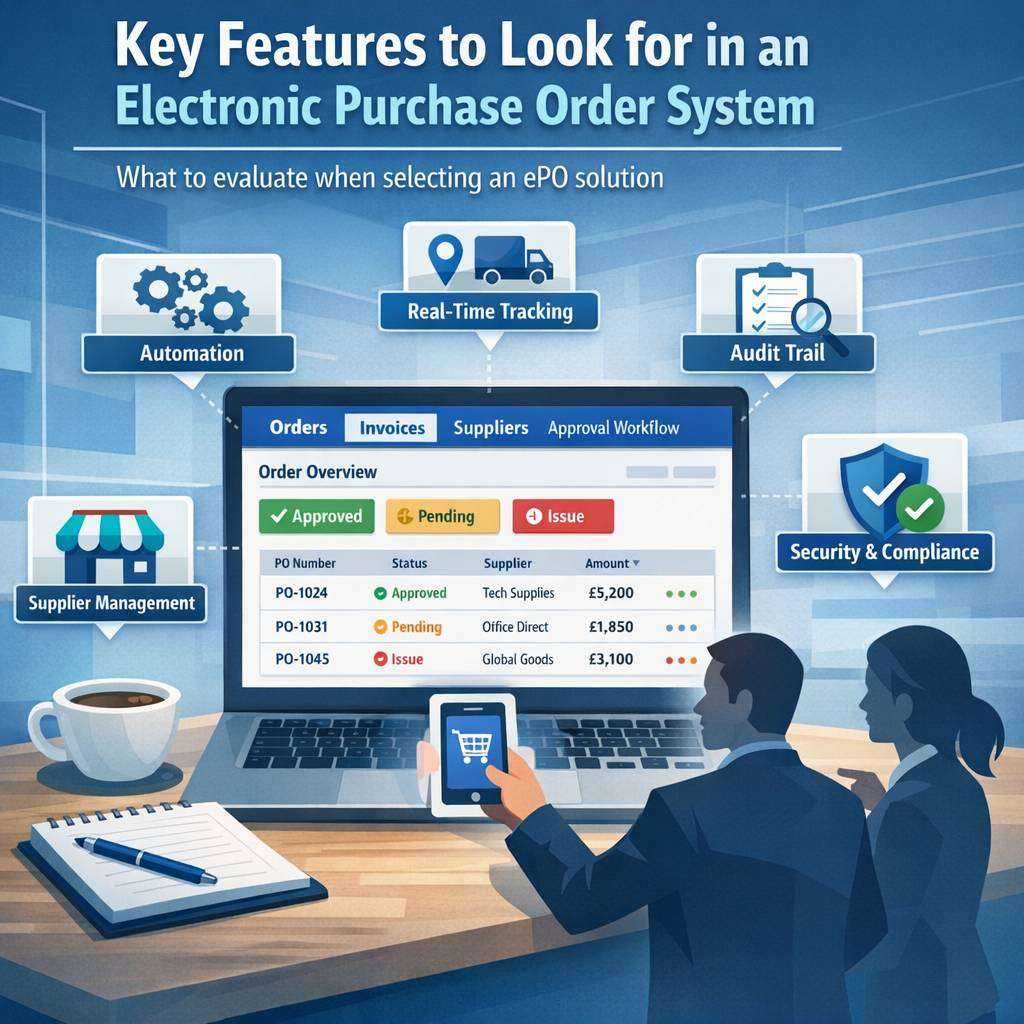
An electronic purchase order system can streamline procurement, reduce errors, and accelerate workflows across departments. By digitizing requisitions, approvals, and tracking, organizations gain visibility, cost control, and faster supplier responses. A modern solution integrates with accounting and inventory, ensuring accurate data and audit trails. For more details, explore a reliable option: electronic purchase order system. This technology supports scalability, compliance, and improved supplier collaboration.
An electronic purchase order system streamlines procurement, reduces errors, and speeds up approval workflows for modern businesses. By digitizing supplier interactions, it enhances traceability and reporting, helping teams monitor spend and stock levels with real-time insights. For seamless deployment and robust security, explore trusted solutions at https://cloudb2b.co.uk/. Implementing an electronic purchase order system lowers administrative burden, improves compliance, and supports scalable growth as your supplier network expands, ensuring faster, more predictable purchasing cycles across departments.
In the contemporary purchasing environment, an efficient purchase ordering system is essential for control, transparency, and cost savings. Whether you operate a small business or oversee procurement for a mid-sized enterprise, selecting the right po system for small business can transform your workflows—from requisition through to supplier invoicing. The shift to electronic purchase orders reduces errors, shortens cycle times, and provides actionable data to inform strategic supplier decisions.
This article outlines the key features to evaluate when choosing a purchase order management system, with a focus on usability, compliance, and value. By understanding what to look for in online purchase orders and related software, organisations can implement a system that scales with growth and delivers measurable improvements in procurement efficiency.
An electronic purchase order system streamlines procurement workflows, reduces manual errors, and improves spend visibility across teams. Companies gain faster approvals, automated supplier communications, and real-time order tracking. Implementing this solution boosts compliance and purchasing efficiency, driving cost savings and better supplier relationships. For more insights, visit https://www.unleashedsoftware.com/blog/purchase-order-system/.
Core functionality and usability
A robust purchase order system UK users can rely on should prioritise core functionality without sacrificing ease of use. Look for:
- Purchase order creation and approval workflows: Automated routing, configurable approval hierarchies, and the ability to capture approver notes help maintain governance while keeping processes efficient.
- Online purchase orders: The ability to generate, send, and modify purchase orders digitally reduces paper dependency and accelerates supplier engagement. An effective po system for small business should support status tracking, PO amendments, and real-time notification of changes.
- Supplier catalog and master data: A central, well-maintained supplier directory with validated contact details, payment terms, and lead times streamlines ordering and reduces data errors. Integration with supplier catalogs can also enable punch-out capabilities and auto-population of line items.
- Search, filters, and reporting: Quick search, custom filters, and a comprehensive suite of reports (spend analysis, supplier performance, cycle times) empower procurement teams to make evidence-based decisions.
- Intuitive user interface: A clean design, guided workflows, and contextual help reduce training time and accelerate adoption across departments, including non-procurement users who occasionally raise purchase requests.
An electronic purchase order system streamlines procurement by automating approvals, reducing manual errors, and accelerating vendor interactions. It centralizes requisitions, tracking, and budgeting while ensuring compliance with internal controls. For more information, visit https://www.ppt.pitt.edu/payments-taxes/payment-methods/pantherexpress-system. By adopting this digital workflow, organizations gain visibility, cost savings, and faster cycle times across purchasing, invoicing, and supplier management.
Compliance, integration, and value
Beyond day-to-day usability, the value of a purchase order management system lies in governance, interoperability, and total cost of ownership. Consider these factors:
- Compliance and controls: Look for built-in controls such as spend limits, duplicate invoice detection, and automatic PO validation against budgets and contracts. Strong audit trails and version history are essential for regulatory compliance and internal accountability.
- Contract and catalogue integration: The system should seamlessly connect with contracting systems to enforce negotiated terms, including price, lead times, and standard terms. For organisations with negotiated rates, this reduces maverick buying and improves compliance.
- ERP and accounting integrations: A good po system for small business will integrate with existing ERP or accounting software to streamline accounts payable, improve data integrity, and reduce manual data entry. Support for standard EDI or API-based integrations is advantageous.
- Online purchase orders and supplier portals: A portal for suppliers enables them to view, acknowledge, and respond to POs, upload invoices, and communicate delivery updates. This improves supplier collaboration and reduces cycle times.
- Mobile and offline capabilities: Mobile access allows approvers and buyers to act on POs from the field. Some systems offer offline functionality to capture requisitions when connectivity is limited, with automatic syncing when online.
- Security and data privacy: Ensure enterprise-grade security, role-based access, encryption in transit and at rest, and regular security updates. Compliance with applicable data protection regulations is essential.
Deployment models, scalability, and total cost
When evaluating po systems for small businesses or growing organisations, consider deployment options, scalability, and the long-term cost implications:
- Deployment model: On-premises versus cloud-based solutions. Cloud-hosted platforms offer easier maintenance, automatic updates, and scalable resources, which is often preferable for small to mid-sized organisations.
- Scalability: The system should accommodate increasing purchase volumes, more extensive supplier networks, and expanded approval hierarchies without performance degradation.
- Total cost of ownership: Assess licensing or subscription fees, implementation costs, training, and ongoing support. While initial outlay matters, ongoing operational savings—through reduced errors, fewer manual processes, and improved supplier terms—determine overall value.
- UK and regional considerations: For organisations in the UK, ensure the purchase order system UK features align with local invoicing standards, VAT handling, and procurement regulations. A system that supports local tax rules and supplier relationships can streamline compliance and supplier onboarding.
Choosing the right solution for your needs
Selecting the appropriate purchase ordering system is about aligning features with your processes and strategic goals. For many small and growing businesses, key differentiators include:
- Ease of adoption and training: A system that minimises disruption and delivers tangible improvements quickly will secure executive sponsorship and user buy-in.
- Strong supplier collaboration tools: A user-friendly supplier portal and clear PO communication reduce response times and expedite deliveries.
- Data-driven insights: Access to spend analytics, supplier performance metrics, and cycle-time reporting supports continuous improvement and strategic procurement planning.
When evaluating purchase order systems, request demonstrations that focus on real-world scenarios within your organisation. Ensure the vendor can tailor workflows to your purchase request types, approval routing, and contract-based pricing. Verify that the system supports online purchase orders and offers a reliable upgrade path that matches your growth trajectory.
In summary, an effective purchase order management system should combine intuitive usability with robust controls, seamless integration, and scalable capabilities. By prioritising these features, organisations can optimise procurement processes, improve supplier relationships, and achieve greater visibility across spend. Whether you refer to it as a po system for small business, an online purchase order system, or simply a purchase ordering system, the right solution can be a strategic differentiator in today’s competitive landscape.