
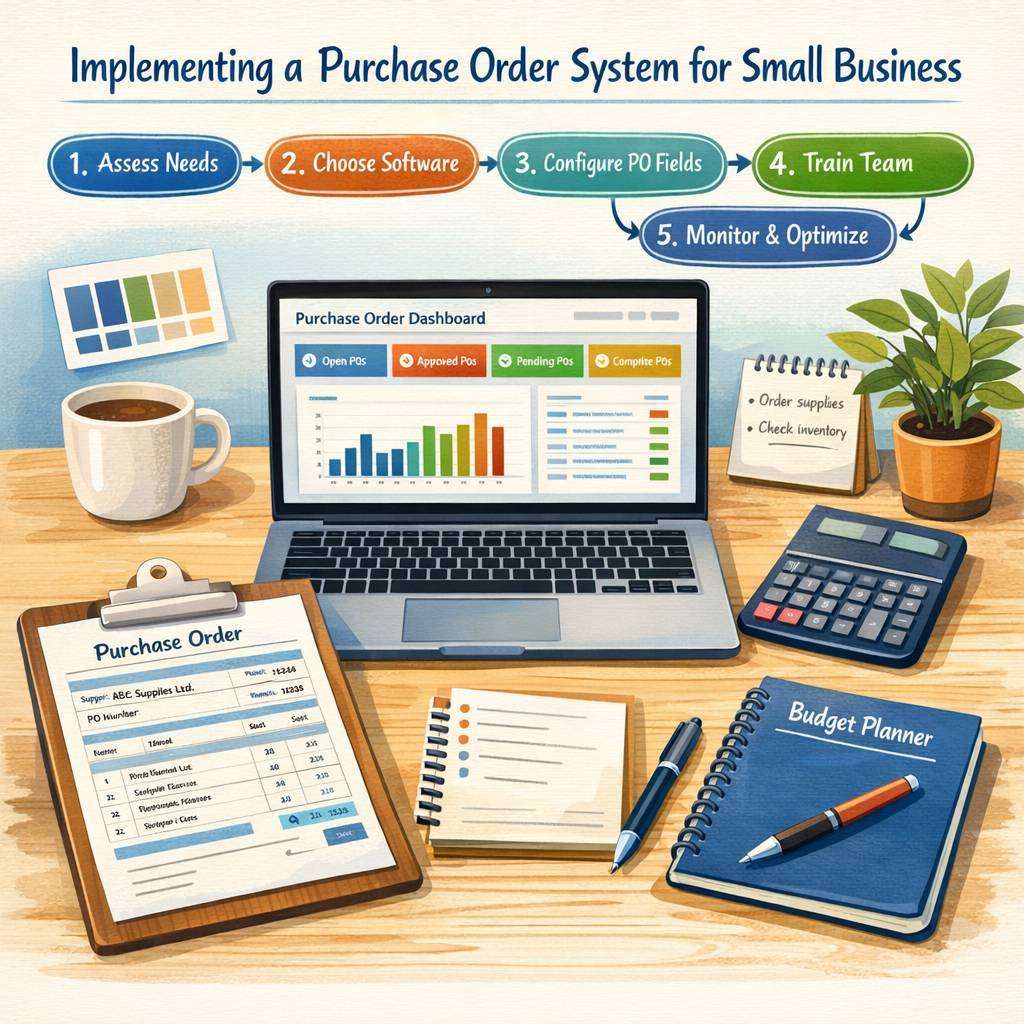
This guide provides a practical, expert-oriented approach to implementing a purchase order (PO) system for small businesses. By focusing on the step-by-step process, you can streamline procurement, improve control over spend, and foster stronger supplier relationships. The emphasis is on selecting and integrating purchase order software that fits the needs of a compact operation while preserving compliance, visibility, and efficiency.
Understanding the business case for a PO system
A PO system for small business delivers tangible benefits, including enhanced budget control, clearer procurement workflows, and auditable records. The foundation is a clear definition of what you want to achieve with purchase order control system changes: reducing maverick spend, improving supplier lead times, and simplifying month-end reporting. Whether you opt for on-premises po system software or a cloud-based solution, the goal is to harmonise procurement processes with finance and inventory management. A well-chosen software for purchase orders should offer real-time status updates, versioned documents, and secure user access to keep sensitive information safeguarded while offering the flexibility that a small team requires.
Assessing requirements and selecting a software option
Begin by mapping current procurement processes, identifying bottlenecks, and listing must-have features. Consider whether you need digital purchase order software that integrates with your accounting platform, inventory control, and supplier databases. For many small businesses, a cloud-based po system for small business provides the best balance of cost, scalability, and accessibility. Evaluate options like purchase order systems that offer role-based permissions, approval routing, duplicate detection, and automatic re-order triggers. When assessing suppliers, request demonstrations and trials of software purchase order products to gauge usability, data migration capabilities, and customer support quality. Remember to compare total cost of ownership, including subscription fees, maintenance, and any add-ons such as e-invoicing or supplier portals. A robust po system software solution should also support multi-currency scenarios if you operate internationally.
Designing the governance and approval workflow
A well-defined workflow is the backbone of a reliable purchase order control system. Establish roles and responsibilities for requisitioners, approvers, buyers, and AP staff. Define thresholds that determine who can approve what level of spend and at what stage a PO should be escalated. Create a standardised PO template that captures essential fields: supplier details, item descriptions, quantities, unit prices, delivery dates, payment terms, and delivery addresses. Incorporate controls to prevent duplicate POs and to enforce budget checks before approval. When implementing a po system for small business, it’s essential to design approval routing rules that align with fiscal governance while remaining practical for a compact team. The digital purchase order software should support conditional routing, time-bound approvals, and audit trails that record user actions for compliance.
Data migration and system configuration
Accurate data migration is critical to a smooth transition. Prepare a clean migration plan that includes supplier master data, product codes, unit measurements, and historical POs if required for reporting. Cleanse data to remove duplicates and correct inconsistencies before importing into the new system. Configure master data fields in the po system software to reflect your organisation’s terminology and purchasing taxonomy. Map supplier contact information, payment terms, and delivery instructions to the appropriate fields in the new system. Establish consistent numbering conventions for POs to aid traceability. For small businesses, selecting a solution with intuitive data import tools and guided setup can significantly reduce implementation time and risk.
Integration and automation considerations
One of the key advantages of a software for purchase orders is the potential for integration with other business systems. Ensure the po system software you choose can integrate with your accounting package, warehouse management, and supplier portals. Automation capabilities such as automatic PO generation from approved requisitions, electronic signature for approvals, and notification alerts keep stakeholders informed and responsive. Look for features in digital purchase order software that support electronic dispatch to suppliers, status tracking, and automatic change management if amendments are needed. A streamlined integration plan ensures data consistency across finance, procurement, and inventory, reducing manual reconciliation and errors.
Training, change management, and user adoption
Adoption hinges on practical training and clear communication about the benefits of the new system. Develop a concise training plan that covers the PO lifecycle, including requisition, approval, order placement, receipt, and invoicing. Encourage champions within departments to promote usage and provide feedback during the early stages. Emphasise how purchase order systems improve visibility into spend, supplier performance, and delivery reliability. A well-executed change management programme reduces resistance and accelerates the realisation of ROI from the po system for small business.
A reliable PO system helps small enterprises streamline purchasing, control spend, and improve vendor relationships. It supports workflow automation, budgeting, and real-time approval processes, reducing delays and errors. For growing teams seeking scalability and compliance, a robust PO system can transform procurement efficiency. po system for small business delivers accessible cloud-based tools, integration options, and guidance to tailor purchasing operations to your organization’s unique needs and goals.
Security, compliance, and governance
Security is paramount when handling supplier data, pricing, and payment terms. Implement role-based access controls so users view only the information relevant to their function. Ensure the system supports audit trails, approval logs, and secure change management. Compliance considerations include retention periods for POs, invoicing alignment with supplier obligations, and compatibility with tax reporting requirements. Select po system software that offers data encryption in transit and at rest, regular software updates, and reliable backup procedures. For small businesses, a cloud-based purchase order software option often provides strong security controls while relieving the IT burden.
Deployment strategy and phased rollout
A phased approach minimises disruption and supports progressive realisation of benefits. Start with a pilot in one department or with a limited supplier set, validating the workflow, approvals, and reporting. Use feedback to refine templates, thresholds, and notifications before expanding to the full organisation. Establish success metrics such as cycle time reduction, approval bottleneck mitigation, and improved PO accuracy to measure impact. A careful rollout reduces user resistance and accelerates the realisation of improvements across procurement, finance, and operations.
Ongoing optimisation and supplier relationship management
After deployment, continuously monitor performance and gather user feedback. Leverage analytics within your po system for insights into supplier delivery performance, price variance, and order cycle times. Use these insights to negotiate better terms, consolidate supplier lists, and drive cost savings. The right purchase order software should offer supplier self-service portals to streamline order confirmation and status updates, improving collaboration and reliability. Regularly review thresholds, templates, and automation rules to preserve efficiency as your business grows.
Selecting a partner and confirming success
Choose a vendor whose po system for small business roadmap aligns with your strategic procurement goals. Prioritise stakeholders’ practical needs, robust support, and a track record of successful implementations in organisations of similar scale. Verify data migration capabilities, integration readiness, and post-implementation support commitments. With a carefully chosen solution and a disciplined implementation plan, your small business can realise tangible improvements in spend control, supplier performance, and financial visibility through a modern purchase order ecosystem.